
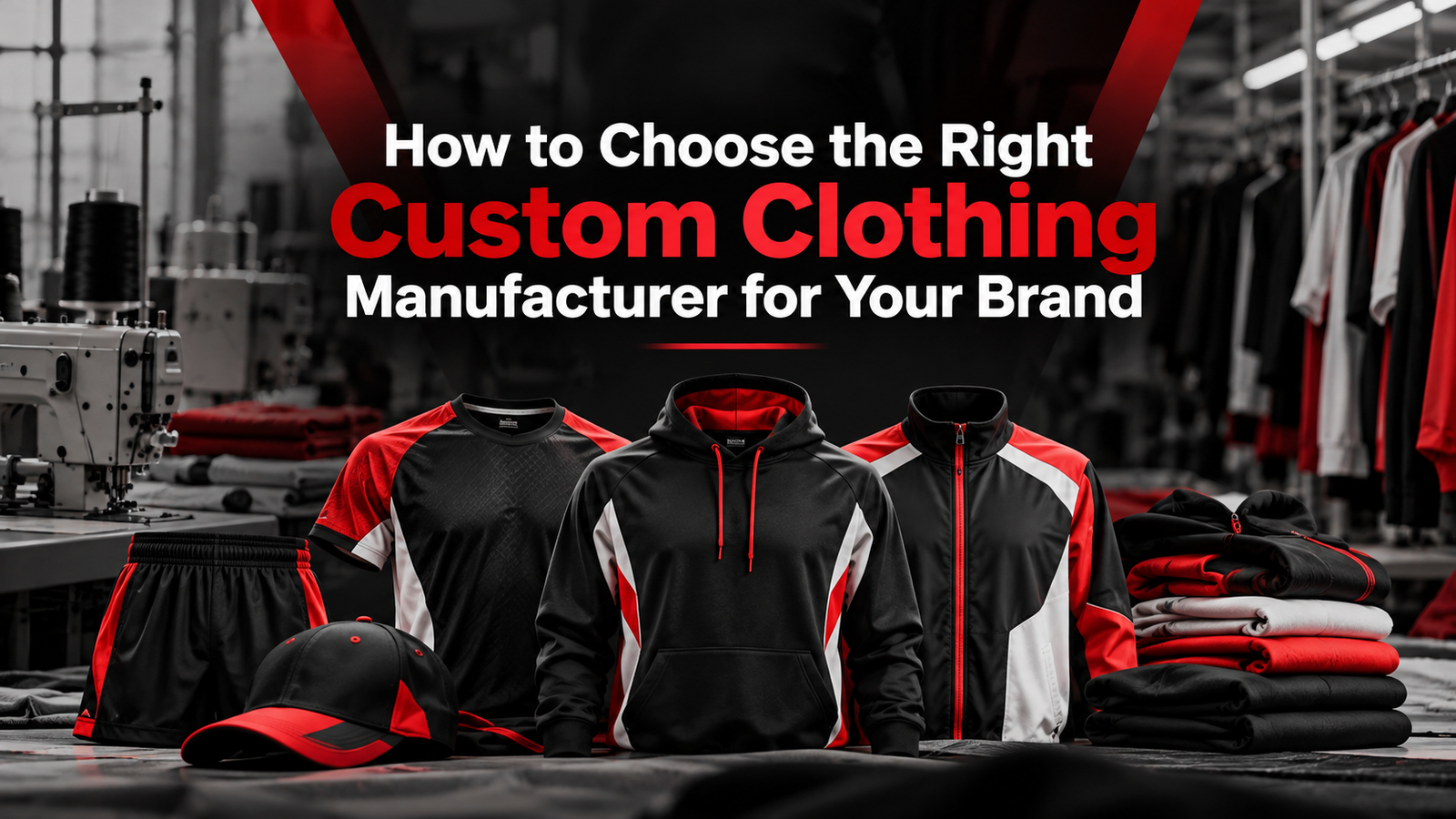
Launching or expanding a clothing brand involves much more than creating attractive designs. A successful apparel business depends on having a manufacturing partner capable of turning those designs into consistent, commercially viable products. From fabric selection and garment construction to branding, finishing, packaging, and production management, every stage can influence the final quality of your collection.
Choosing the right custom clothing manufacturer is therefore one of the most important decisions a fashion, sportswear, lifestyle, or performance brand can make.
A suitable manufacturer should not simply produce garments according to a specification sheet. The right partner should understand your product vision, communicate clearly, maintain consistent standards, and provide the flexibility required as your business grows.
Start With Your Product Requirements
Before contacting manufacturers, define exactly what you want to produce.
Your requirements may include T-shirts, hoodies, jackets, trousers, sports uniforms, training apparel, casual clothing, protective garments, gloves, bags, or specialized performance products.
Consider important details such as:
- Product type
- Fabric composition
- Fabric weight
- Colors
- Size range
- Fit and measurements
- Printing requirements
- Embroidery
- Labels and tags
- Packaging
- Quantity
- Expected delivery schedule
- Target market
A clear product brief makes communication easier and helps manufacturers determine whether they have the appropriate capabilities.
Evaluate Manufacturing Capabilities
Not every factory specializes in every type of apparel.
A manufacturer focused primarily on basic casual garments may not have the same expertise required for technical sportswear or specialized protective clothing. Likewise, a factory experienced in performance garments may have different strengths from one specializing in fashion collections.
When evaluating a manufacturing partner, investigate whether they can handle the type of products your brand requires.
Look for capabilities related to:
Apparel Manufacturing
A professional manufacturer should have experience with different garment constructions and production techniques. This becomes particularly important when your collection contains multiple product types.
Custom Development
If you have your own designs, patterns, measurements, or technical specifications, the manufacturer should be capable of working from your requirements rather than forcing your products into a standard template.
Branding
Private-label brands often require custom neck labels, woven labels, printed labels, hangtags, packaging, embroidery, patches, or other branding elements.
Specialized Products
If your business operates in sports, fitness, martial arts, motorsport, safety, or another specialized field, ask whether the manufacturer understands the functional requirements associated with those products.
Quality Should Be Considered at Every Stage
Quality control does not begin after manufacturing is complete.
A reliable production process considers quality from the beginning.
Fabric should be evaluated for appropriate weight, feel, durability, color consistency, and intended use. Patterns and measurements should be checked before bulk production. Sewing quality, seams, trims, zippers, prints, embroidery, and finishing should also be inspected.
For performance apparel, additional considerations may include stretch, breathability, moisture management, mobility, abrasion resistance, and durability.
A professional manufacturing partner should have a structured approach to maintaining consistency.
Communication Is a Major Factor
Even an experienced factory can become difficult to work with if communication is poor.
During product development, questions often arise about measurements, materials, artwork, colors, construction, packaging, and production schedules.
Your manufacturer should provide clear responses and communicate potential issues before they become expensive production problems.
Good communication can help prevent:
- Incorrect specifications
- Delayed production
- Material misunderstandings
- Branding errors
- Incorrect sizing
- Packaging problems
- Unnecessary revisions
For international clients, communication becomes even more important because production is often coordinated remotely.
Ask About Customization and Private Label Services
If you’re building a recognizable brand, customization should be an important consideration.
Private-label manufacturing allows businesses to develop products under their own brand identity rather than selling generic garments.
Depending on the manufacturer, customization may include:
- Custom colors
- Custom fabrics
- Custom patterns
- Brand labels
- Hangtags
- Embroidery
- Screen printing
- Heat transfer
- Sublimation
- Custom patches
- Packaging
- Product finishing
The more flexible the manufacturer, the easier it becomes to create a collection that feels genuinely unique.
Consider Production Flexibility
Your requirements may change as your business develops.
A startup might initially need a small collection, while an established retailer may eventually require significantly larger production volumes.
A useful manufacturing partner should be able to support different stages of growth.
Instead of evaluating a factory only according to today’s order, consider whether it can potentially support your brand in the future.
Why Product Development Matters
A strong manufacturing relationship begins before bulk production.
Product development allows brands to evaluate the design, fit, materials, construction, and appearance before committing to a large quantity.
Sampling can reveal issues that may not be visible in digital artwork.
For example, a graphic may appear excellent on a screen but require adjustment because of the garment’s seams or fabric characteristics. A particular fabric may look suitable but not provide the required stretch or durability.
Product development gives manufacturers and brands an opportunity to solve these issues early.
Think Beyond Price
Price is obviously important, but choosing a manufacturer solely because they offer the lowest quotation can create problems later.
A cheaper product may involve compromises in fabric quality, stitching, finishing, packaging, communication, or consistency.
Instead, consider the total value offered by the manufacturer.
Ask:
Does this manufacturer help me produce a better product reliably?
That question is often more useful than simply asking:
Who offers the lowest price?
Build a Long-Term Manufacturing Relationship
The strongest apparel businesses often develop long-term relationships with their manufacturing partners.
Over time, the manufacturer becomes familiar with your preferred fabrics, measurements, construction methods, branding requirements, packaging standards, and quality expectations.
This can make future production more efficient.
Instead of explaining every requirement from the beginning, your production partner already understands your standards.
Final Thoughts
Choosing a custom clothing manufacturer is ultimately about finding a partner that can translate your ideas into consistent, high-quality products.
Look beyond basic production capacity and evaluate customization, communication, quality control, product development, flexibility, and long-term support.
For brands developing fashion apparel, sportswear, casual collections, specialized gear, or private-label products, the right manufacturing relationship can become an important part of long-term growth.
TrolatSports works with brands looking for customized apparel and performance-oriented manufacturing solutions, combining product development, customization, craftsmanship, and flexible production for different market requirements.