
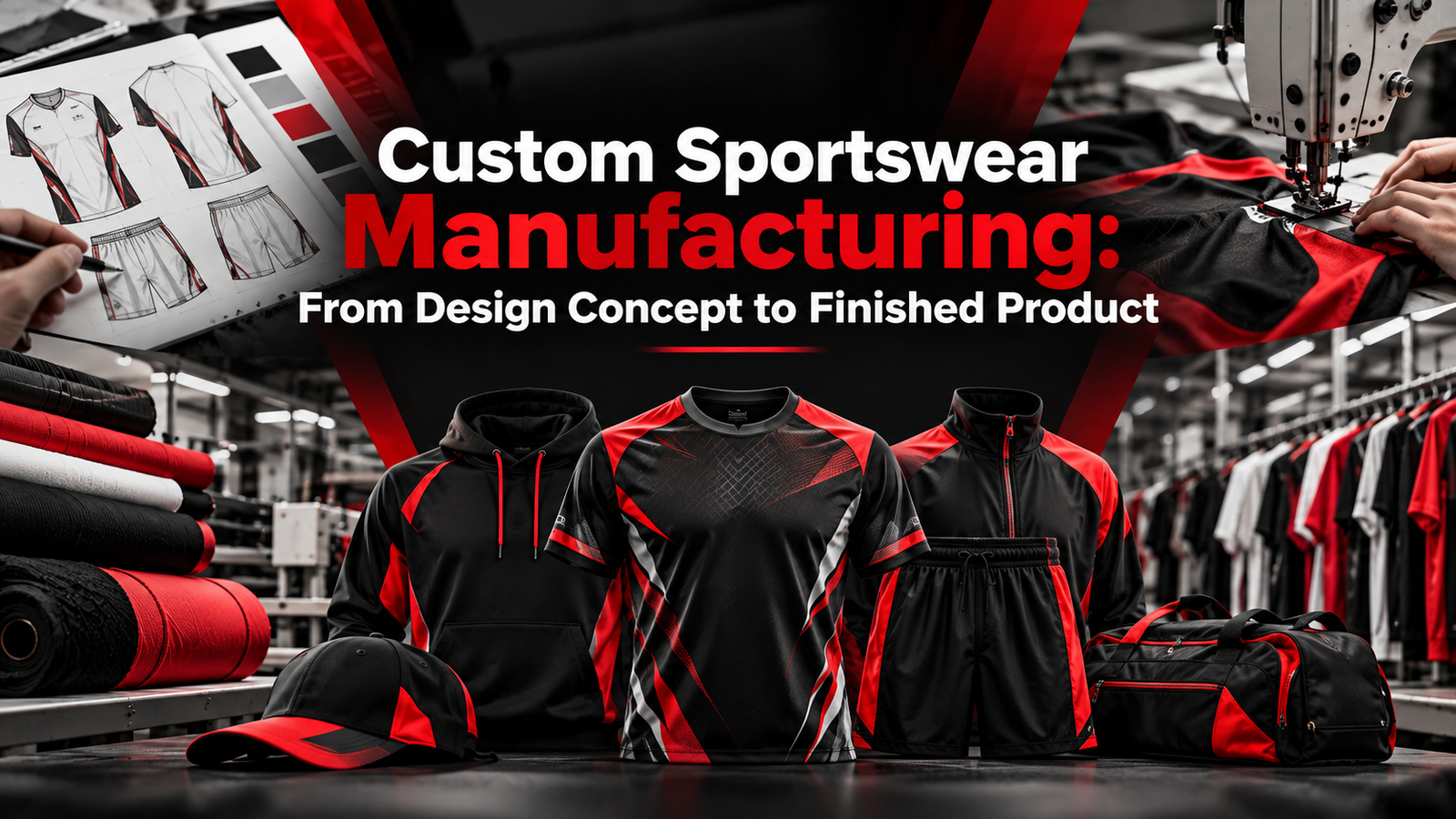
Sportswear has evolved far beyond basic athletic clothing. Modern teams, clubs, fitness brands, retailers, and sports organizations increasingly expect apparel that combines performance, comfort, visual identity, and durability.
This demand has made custom sportswear manufacturing an important part of the global apparel industry.
Custom sportswear allows brands and organizations to create products around specific requirements instead of selecting generic products from an existing catalog. Colors, patterns, fabrics, fit, branding, construction, and finishing can all be developed according to the intended application.
But how does the process actually work?
1. Defining the Product
Every successful sportswear project begins with a clear product concept.
A brand may want to develop a football uniform, basketball kit, training shirt, cycling jersey, tracksuit, compression garment, martial arts uniform, motorsport apparel, or another performance-focused product.
At this stage, the manufacturer needs to understand:
- Intended sport or activity
- Target customer
- Product silhouette
- Required fit
- Performance expectations
- Fabric preferences
- Branding requirements
- Color palette
- Size range
- Quantity
- Packaging requirements
The clearer the requirements, the easier it becomes to develop an accurate product.
2. Selecting the Right Fabric
Fabric selection can significantly affect the performance of sportswear.
Different activities create different requirements.
A training garment may need lightweight construction and moisture management. A winter product may require insulation and greater protection from cold conditions. A competition uniform may prioritize stretch, mobility, and breathability.
Common considerations include:
Breathability
Sportswear can generate significant body heat. Breathable fabrics can help improve comfort during physical activity.
Stretch
Stretch fabrics can provide greater freedom of movement, which is particularly important for training, fitness, martial arts, and many competitive sports.
Durability
Products used frequently or in demanding environments need materials capable of handling repeated washing, movement, and abrasion.
Weight
Lightweight fabrics can be beneficial for active products where unrestricted movement is important.
3. Developing the Design
Once the product requirements and materials are established, the design can be developed.
Modern sportswear design often incorporates team colors, logos, patterns, sponsor placements, player numbers, names, and other visual elements.
A manufacturer needs to ensure that the design is not only visually attractive but also practical for production.
Certain artwork may need adjustment depending on fabric type, garment construction, printing method, or available production techniques.
4. Creating a Sample
Sampling is one of the most valuable stages of custom manufacturing.
A sample allows the client and manufacturer to evaluate the product before bulk production.
During sample evaluation, brands can inspect:
- Overall appearance
- Fit
- Measurements
- Fabric feel
- Stitching
- Artwork placement
- Color
- Branding
- Trims
- Functional details
If something needs to be changed, adjustments can be made before production begins.
5. Size Development and Grading
Sportswear is rarely produced in one size.
A complete size range needs to maintain the intended proportions and fit across different body types.
Patterns can therefore be graded according to the required size specification.
For teamwear, this may involve a broad range of adult and youth sizes. For commercial fashion collections, the sizing strategy may be based on the target market.
Accurate size development is essential because inconsistent grading can negatively affect customer satisfaction.
6. Production
Once the design and sample are approved, production can begin.
Depending on the product, manufacturing may involve multiple stages including cutting, stitching, printing, embroidery, assembly, finishing, and inspection.
Production consistency becomes particularly important when manufacturing hundreds or thousands of pieces.
Every production batch should maintain the approved specifications as closely as possible.
7. Branding and Customization
Brand identity is a major part of modern sportswear.
A basic garment can become a recognizable branded product through thoughtful customization.
Manufacturers may provide options such as:
- Woven labels
- Printed labels
- Embroidery
- Heat transfers
- Sublimation
- Screen printing
- Patches
- Custom trims
- Custom packaging
- Hangtags
This allows businesses to develop products that reflect their own visual identity.
8. Quality Control
Quality control protects both the manufacturer and the client.
Before products are packed, garments should be inspected for manufacturing issues.
Inspection may include checking:
- Stitching
- Measurements
- Fabric defects
- Color consistency
- Print quality
- Embroidery
- Zippers
- Seams
- Labels
- Loose threads
- General finishing
For technical sportswear, functional aspects should also be considered.
9. Packaging and Preparation
The final presentation of a product matters, particularly for retail brands.
Products may need folding, tagging, individual packaging, size identification, barcode labels, or customized packaging.
Proper preparation makes the products easier to distribute and present to customers.
Custom Sportswear for Different Markets
One of the biggest advantages of custom manufacturing is flexibility.
The same manufacturing approach can support different markets, including:
- Sports teams
- Fitness brands
- Sports retailers
- Schools
- Clubs
- Martial arts academies
- Motorsport organizations
- Outdoor businesses
- Private-label brands
- E-commerce companies
Each customer can have different requirements, making customization an important part of the manufacturing process.
Why Work With an Experienced Manufacturer?
A professional sportswear manufacturer can contribute much more than production capacity.
Manufacturing experience can help identify practical problems before production begins, recommend suitable materials, improve construction, and create products that balance appearance and performance.
This becomes especially valuable when a brand is developing a completely new product.
The Future of Sportswear Manufacturing
Sportswear continues to move toward greater personalization, technical performance, and brand differentiation.
Customers increasingly expect apparel that looks distinctive while also performing well during activity.
For manufacturers and brands, this creates opportunities to develop products around specific sports, lifestyles, environments, and customer expectations.
Conclusion
Custom sportswear manufacturing is a complete product-development process rather than simply printing a logo onto an existing garment.
It involves planning, fabric selection, design development, sampling, sizing, production, customization, quality control, and finishing.
When these stages are handled carefully, brands can develop sportswear collections that are visually distinctive, functional, durable, and aligned with their target market.
TrolatSports provides customized apparel and performance manufacturing solutions for brands and organizations looking to transform product concepts into professionally manufactured collections.